When people hear the term “proprietary trading firm” (prop firm), they often picture endless rulebooks, hidden traps, and bureaucratic restrictions. Topstep stands out in the futures space primarily because of its straightforward, transparent evaluation model. It allows disciplined traders to showcase their edge without wasting mental bandwidth deciphering convoluted fine print.
Whether you are preparing to take your first Trading Combine or aiming to build a steady stream of payouts from an Express Funded Account (XFA), this comprehensive guide covers everything: pricing structures, risk parameters, step-by-step account activation, payout mechanics, and the risk-management strategies required to pass and stay funded.
What You Will Learn in This Guide
- Pricing vs. Payout Pathways: Standard vs. No-Activation-Fee plans.
- Core Risk Parameters: Daily Loss Limit (DLL), Maximum Loss Limit (MLL), and Consistency thresholds.
- Tradable Instruments & Market Hours: What you can trade and strict overnight policies.
- Account Progression: Trading Combine
→→Express Funded Account (XFA)→→Live Funded Account (LFA). - Reset Mechanics: Paid resets vs. monthly Reset Credits.
- Payout Blueprints: Standard Route vs. Consistency Route, profit splits, and balance buffer management.
- Strategic Advice: Practical rules for managing risk, executing trades, and maintaining long-term profitability.
1. Pricing Structure: Standard Plan vs. No-Activation-Fee Plan
Before buying a Combine, you need to understand Topstep’s two primary cost structures and how they interact with payout rules.
| Feature | Standard Plan | No-Activation-Fee Plan | Key Considerations |
| Cost Logic | Lower recurring monthly fee; requires a one-time $149 activation fee upon passing. | Higher monthly fee; $0 activation fee upon passing. | Evaluate your confidence. If you pass on Month 1, calculate total setup cost. |
| Reset Cost | Matches the regular monthly subscription price. | Matches the plan’s higher monthly price. | Resetting a “No-Activation-Fee” account is significantly more expensive. |
| Payout Route | Choose between Standard or Consistency Route upon activation. | Choose between Standard or Consistency Route upon activation. | Payout routes are selected when configuring your XFA, not at checkout. |
| Platform | TopstepX (or Quantower connected via TopstepX credentials). | TopstepX (or Quantower connected via TopstepX credentials). | Platform execution influences trading workflow and multi-chart setups. |
Which Plan Should You Choose?
- Choose the Standard Plan if you are testing new strategies or anticipate that passing might take more than one billing cycle. The lower monthly fee keeps overhead manageable while you build consistency.
- Choose the No-Activation-Fee Plan if you have a proven edge, backtested strategy, and reasonable confidence that you can hit the profit target within the first 30 days without blowing up the account.
2. What Is Topstep? An Overview
Topstep is an established futures evaluation firm that funds retail traders through a multi-stage process:
- Trading Combine: The evaluation sandbox where you prove your ability to hit a profit target without exceeding drawdown limits.
- Express Funded Account (XFA): A simulated funded tier. Although trading in a simulated environment, profits earned here are paid out in real cash once criteria are met.
- Live Funded Account (LFA): Traders who demonstrate sustained profitability in an XFA may be migrated to a live broker account trading real exchange capital.
Account Sizes & Target Metrics
| Account Size | Buying Power / Max Contracts | Profit Target | Maximum Loss Limit (MLL) | 55% Consistency Ceiling |
| 50K | 5 Contracts (50 Micros) | $3,000 | $2,000 | $1,650 |
| 100K | 10 Contracts (100 Micros) | $6,000 | $3,000 | $3,300 |
| 150K | 15 Contracts (150 Micros) | $9,000 | $4,500 | $4,950 |
Note: For the 50K Combine, your drawdown allowance (3,000), offering a balanced risk-to-reward ratio for retail accounts. The 100K and 150K sizes are designed for scaling larger size, not necessarily easier passing.
3. Tradable Instruments and Overnight Rules
Topstep focuses exclusively on CME Group futures markets:
- Equity Indices: E-mini S&P 500 (ES), Micro E-mini S&P (MES), E-mini Nasdaq 100 (NQ), Micro E-mini Nasdaq (MNQ), E-mini Dow (YM), Micro Dow (MYM), Russell 2000 (RTY).
- Commodities: Crude Oil (CL), Gold (GC), Silver (SI), Natural Gas (NG), Copper (HG), and their micro counterparts.
- Currencies: Euro FX (6E), Japanese Yen (6J), British Pound (6B), Australian Dollar (6A).
- Interest Rates: 10-Year T-Note (ZN), 2-Year T-Note (ZT), 30-Year Bond (ZB).
- Agricultural: Corn (ZC), Soybeans (ZS), Wheat (ZW).
Overnight Holding Policy (Strict Flat Rule)
Topstep strictly prohibits holding positions overnight.
- All open positions across Combine, XFA, and LFA accounts must be flattened before 15:10 Central Time (CT).
- Topstep’s automated risk-liquidation system begins closing out trades as early as 15:08 CT.
- Any asset that closes earlier than regular market close must be flattened prior to that specific contract’s market halt.
- The next trading session begins at 17:00 CT.
4. Decoding the Combine Rules
1. Maximum Loss Limit (MLL)
The MLL is the only rule that will terminate your Combine account. It functions as an End-of-Day (EOD) trailing drawdown:
- It trails your highest end-of-day account balance.
- Once your account balance hits the initial starting amount (e.g., $50,000 on a 50K account), the MLL locks at that starting balance and stops trailing upward.
Example: On a 50K account, your starting floor is $48,000.
- If you make $500 on Day 1 (closing balance: $50,500), your new trailing floor for Day 2 rises to $48,500.
- If you lose $300 on Day 2, your floor remains at $48,500.
- Once your account reaches $52,000, your floor moves to $50,000 and never climbs higher.
2. Daily Loss Limit (DLL)
The DLL acts as an intraday safety net rather than a catastrophic rule violation.
- Triggering the DLL automatically flattens open orders and locks the account until the next session at 17:00 CT.
- It does not blow your Combine account, provided the intraday loss did not also breach the trailing MLL.
- On Combine and XFA accounts, DLL can be added as an optional risk management parameter (often offering subscription discounts on No-Activation plans). On Live Funded Accounts (LFA), the DLL is mandatory.
3. The 55% Consistency Rule
To prevent reckless “all-in” gambling, Topstep requires that no single trading day accounts for more than 55% of your total cumulative profit upon passing.
- If you hit your $3,000 target on a 50K account, but made $2,000 on one lucky trade, the account is not violated. However, your target will dynamically adjust upward:
Adjusted Profit Target=Highest Day Profit0.55=$2,0000.55≈$3,636.37Adjusted Profit Target=0.55Highest Day Profit=0.55$2,000≈$3,636.37 - You must continue trading until your best day falls to 55% or less of your total profit. Passing requires a minimum of two separate trading days.
5. Account Resets and Reset Credits
If you violate the MLL, you can reset your Combine instead of buying a new subscription:
- Log into your Dashboard, select the breached account, and click Reset.
- If you have a Reset Credit, it will apply automatically; otherwise, you pay the reset fee.
- Your balance, MLL trail, consistency stats, and calendar days reset back to zero.
- Important: Executing a paid reset or using a credit updates and rolls your next billing cycle date forward by one month.
Reset Credits (Reset Bank)
- Active subscribers receive 1 Reset Credit every time their monthly subscription rebills.
- Credits sit in your Reset Bank and can only be used on an account of matching size and tier.
- Credits earned after December 11, 2025, remain valid for one year.
- Reset credits cannot be applied to XFA or LFA accounts.
6. Four-Step Combine Registration
- Select Account Tier: Beginners should generally start with the 50K plan to optimize risk-to-drawdown ratios.
- Select Platform: TopstepX is the default browser/desktop client. Those using Quantower can integrate their TopstepX credentials directly.
- Monitor the Trader Hub: Before opening orders, inspect your Dashboard to confirm daily equity, available drawdown distance, and current market halts.
- Trade Execution: Launch your platform, follow your trading plan, and adhere strictly to position sizing rules until the target is reached.
7. Core Strategies to Pass the Evaluation
- Trade High-Liquidity Contracts: Stick to contracts with tight spreads and deep order books (e.g., ES, NQ, YM, or GC). Spreading yourself thin across five unrelated commodities introduces noise and execution slip.
- Cap Risk Per Trade at
200–200–300 (50K Account): A single loss should never exceed 10–15% of your total MLL. Risking $500 on one trade puts you just four consecutive errors away from an account liquidation. - Step Down to Micros During Drawdowns: If you hit a losing streak or trigger a DLL, spend the following session trading Micro contracts (MES/MNQ). Recovering emotional baseline matters more than rushing to make back lost ticks.
- Avoid News Straddles: Trading into high-impact CPI, FOMC, or NFP releases creates slippage that can blow right through stop-loss orders and breach the MLL before the risk engine catches it.
8. Moving from Combine to the Express Funded Account (XFA)
Once your profit target and consistency requirements are validated, you will receive your passing certificate and an onboarding invitation:
- Click Activate Account on the dashboard.
- Review and digitally sign the independent contractor agreement.
- Pay the $149 one-time activation fee (waived if you chose the No-Activation-Fee monthly tier).
- Your XFA credentials will be generated automatically.
XFA Account Mechanics
- Starting Balance: Displayed as $0.00 base.
- MLL Floor: Starts at -$2,000 (for 50K) and trails your positive balance until it hits $0.00. Once your account profit reaches $2,000, your loss limit locks permanently at $0.00.
- Profit Targets: There is no profit target in the XFA. You trade to extract payouts.
9. Topstep Payout Mechanics
When trading in an XFA, you must select one of two payout pathways:
A. Standard Payout Route
- Requirement: Accumulate at least 5 winning days of
+$150+$150or more. - Withdrawal Allowance: Up to 50% of your account balance per request.
- Single Withdrawal Caps: 50K: $2,000 | 100K: $3,000 | 150K: $5,000.
- Subsequent Requests: From the second payout onward, your balance must exceed the previous post-withdrawal balance by at least
+$0.01+$0.01.
B. Consistency Payout Route
- Requirement: Minimum of 3 trading days with at least one trade executed per day, and your single best day must not exceed 40% of total profits earned during that payout cycle.
- Withdrawal Allowance: Up to 50% of your account balance per request.
- Single Withdrawal Caps: 50K: $3,000 | 100K: $4,000 | 150K: $6,000.
Profit Split Structure
- New Traders (Post Jan 12, 2026): Standard 90/10 split (trader keeps 90%, Topstep retains 10%) starting from the very first dollar withdrawn.
- Legacy Accounts (Pre-dating Jan 12, 2026): First $10,000 in lifetime payouts at 100%; 90/10 split thereafter.
Critical Warning: Post-Payout MLL Behavior
Upon your first payout, your MLL locks permanently at $0.00.
Never drain the full 50% allowance if doing so leaves you with insufficient cushion to execute your edge. Leave enough capital behind to absorb normal drawdown cycles.
Banking and Processing Details (International / Non-US Traders)
- Payout Methods: SWIFT wire transfer is standard for global traders (Topstep charges a $30 wire fee; intermediary bank fees may apply). Wise payouts are currently restricted to select jurisdictions.
- Tax Documentation: Non-US individual traders must complete an electronic W-8BEN form during initial setup.
- Processing Speed: Internal approval typically requires 1–3 business days, followed by 3–7 business days for SWIFT funds to clear into local bank accounts.
Transition to the Live Funded Account (LFA)
Traders with established track records in XFA may be invited to an LFA.
- The LFA trades actual brokerage capital.
- Accumulating 30 winning days of
≥$150≥$150inside the LFA unlocks daily payout eligibility up to 100% of the account balance (taking a 100% withdrawal closes the account).
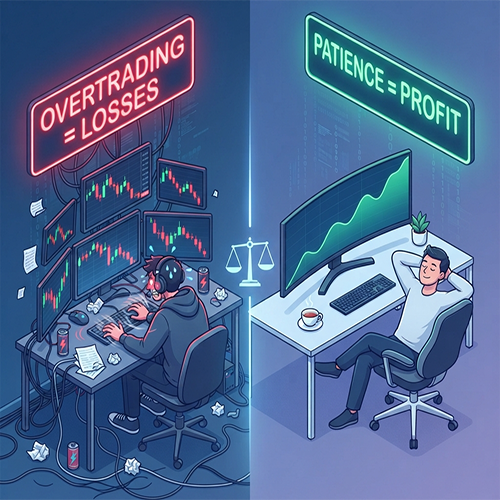
10. The Bottom Line: Trade for Longevity, Not Speed
Many traders fall into the trap of using excessive leverage to pass the Combine in two days. While possible, this behavior almost always results in blowing the funded account shortly afterward.
Prop firms design evaluations to test whether you can manage risk when emotions run high. Treat the Trading Combine not as an obstacle to clear with luck, but as a low-cost testing ground to build structured execution habits. If you can protect your downside, follow the daily loss guidelines, and avoid over-leveraging, the profits—and the payouts—will follow naturally.