Yesterday, a guy named Jeff Rose dropped a PayPal payout screenshot on X: “Facebook has sent you $53,237.46 USD.” It hit his account on October 22.
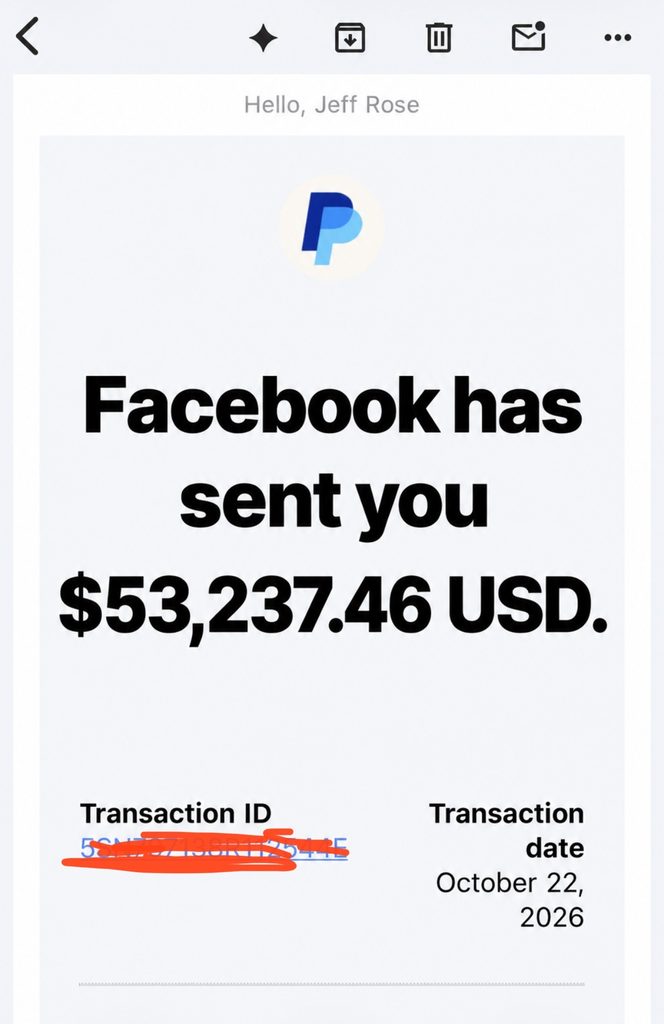
He’s a retired Certified Financial Planner (CFP) with 46,000 followers on X. This money didn’t come from direct advertisers or brand sponsorships—it’s pure ad-revenue sharing from the Facebook Content Monetization program. You post content on Facebook, and the platform pays you a cut of the ad revenue based on your views.
How He Does It
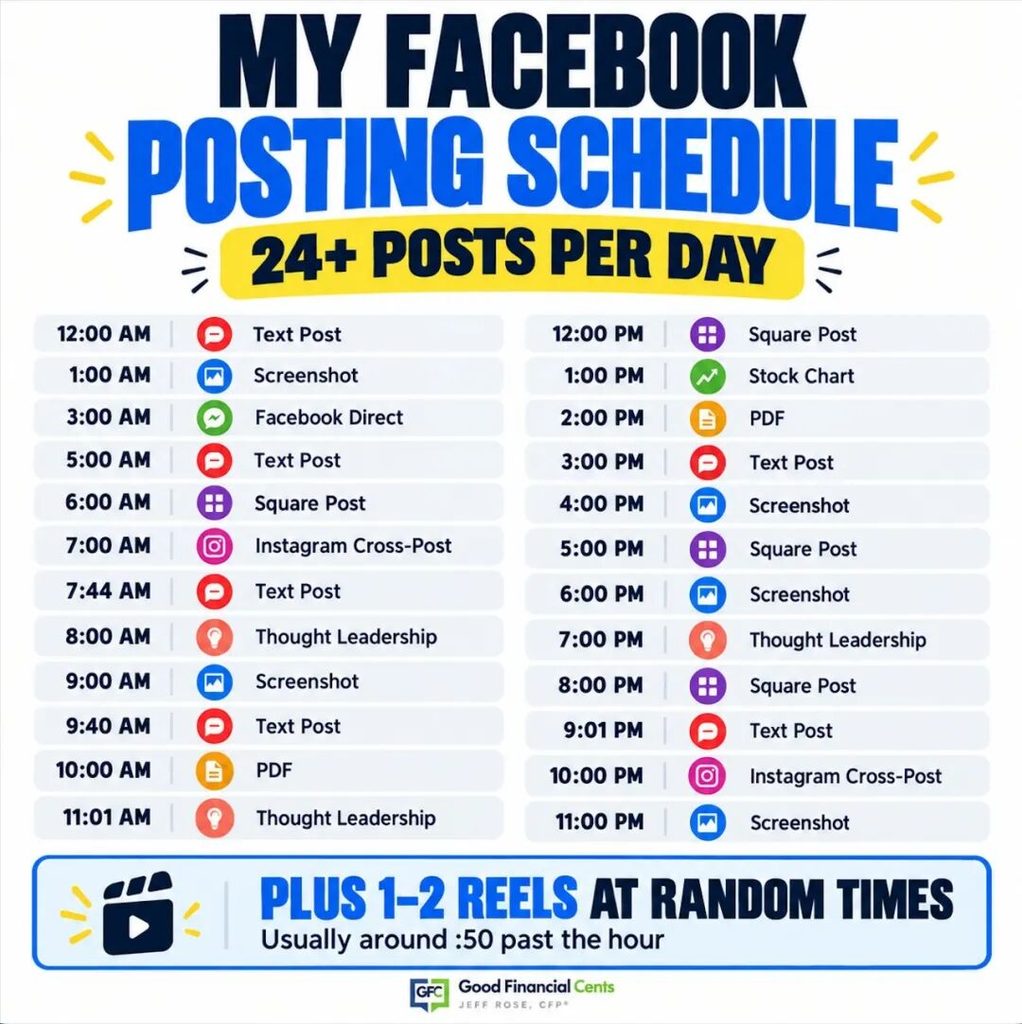
His Facebook page, Good Financial Cents, is in the personal finance niche and has 820,000 followers. He posts over 24 times a day, plus 1 to 2 Reels.
Those 24 daily posts are broken down into seven distinct formats: 6 plain-text posts, 5 screenshots, 4 square images, 3 opinion pieces, 2 PDF carousels/documents, 2 cross-posted Instagram updates, and 1 stock chart.
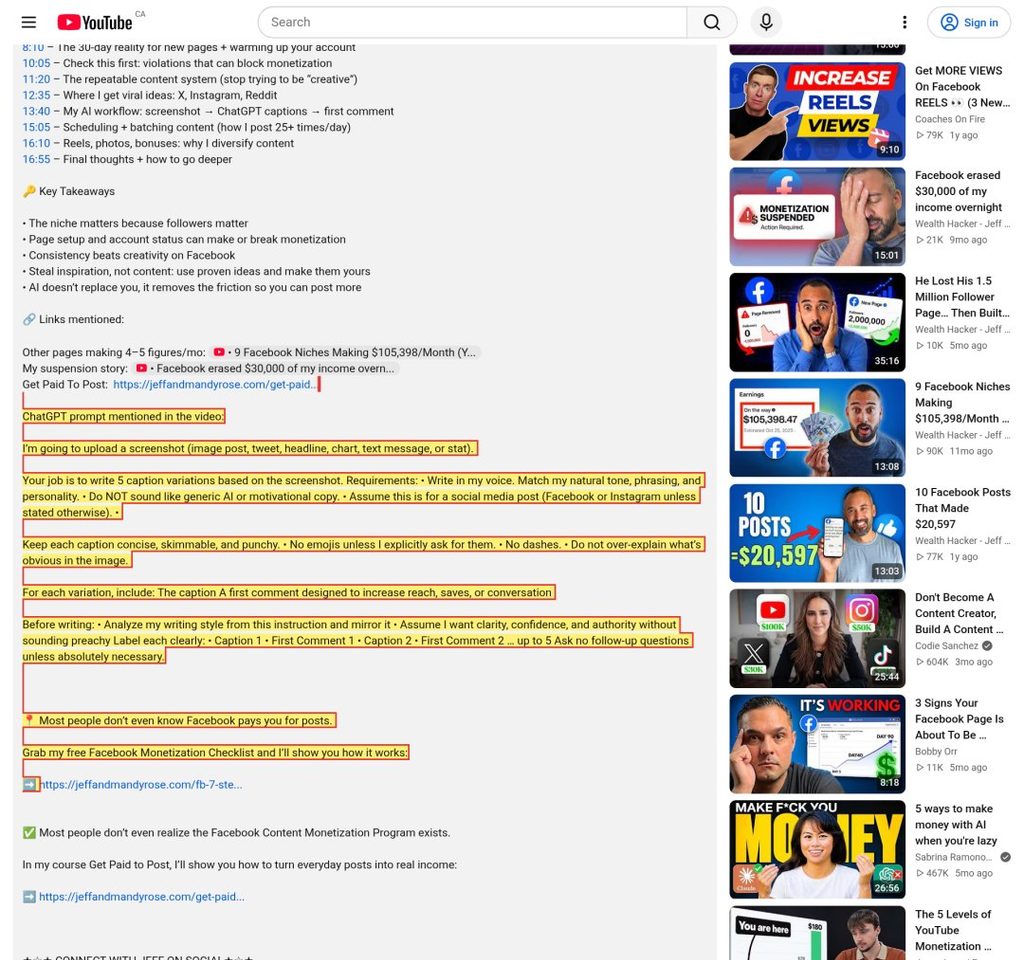
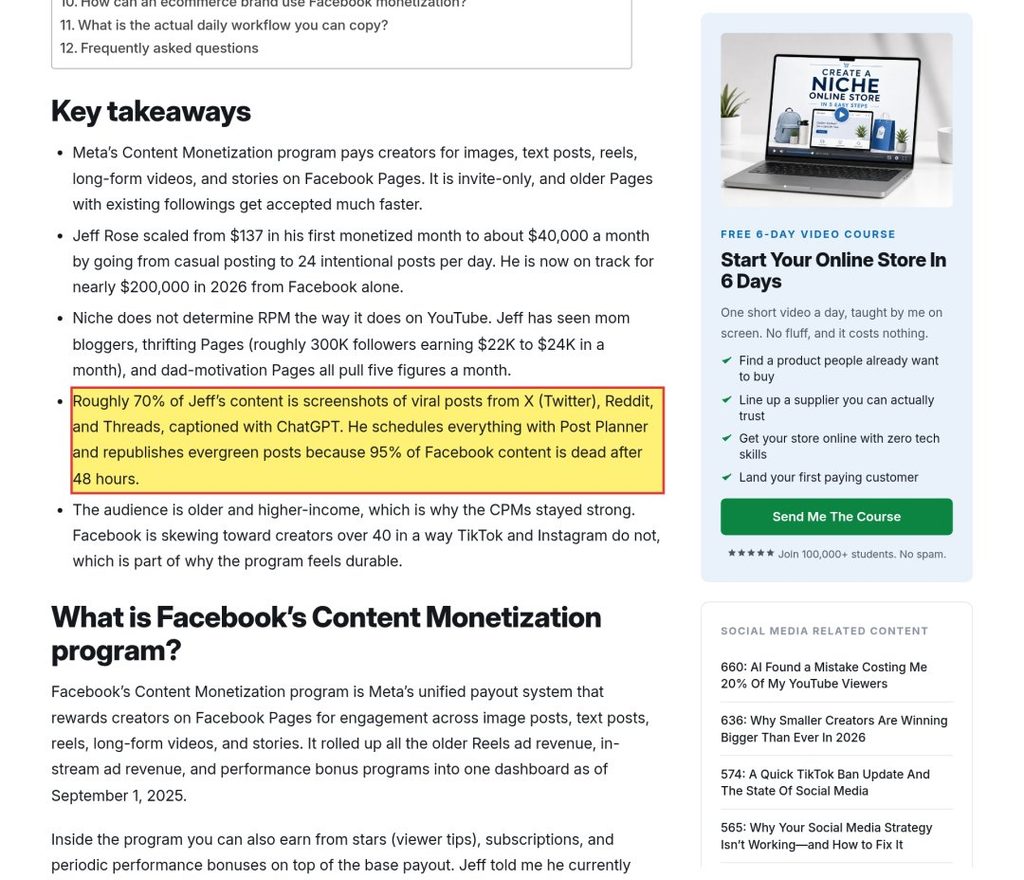
By his own admission, roughly 70% of his content consists of screenshots of viral posts pulled from X, Reddit, and Threads. For every screenshot, he has ChatGPT generate five variations of the caption and five variations of the first comment. He picks the one that sounds the least AI-generated and uses a scheduling tool to auto-publish one post every hour on the hour.
Breaking Down the Revenue Numbers
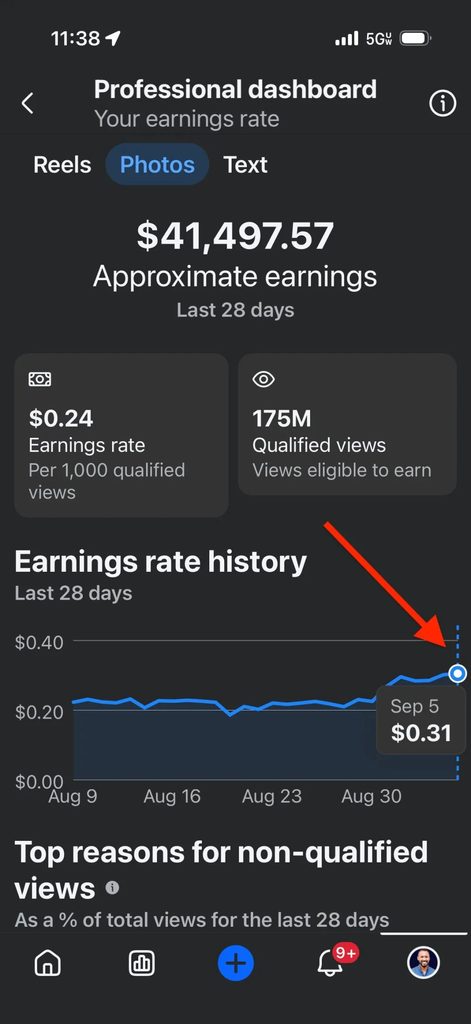
For image-based content alone over the past 28 days, he racked up 175 million qualified views, generating an estimated $41,497.57—which works out to an RPM (revenue per 1,000 views) of $0.24.
175 million views. In a single month. Just from static images.
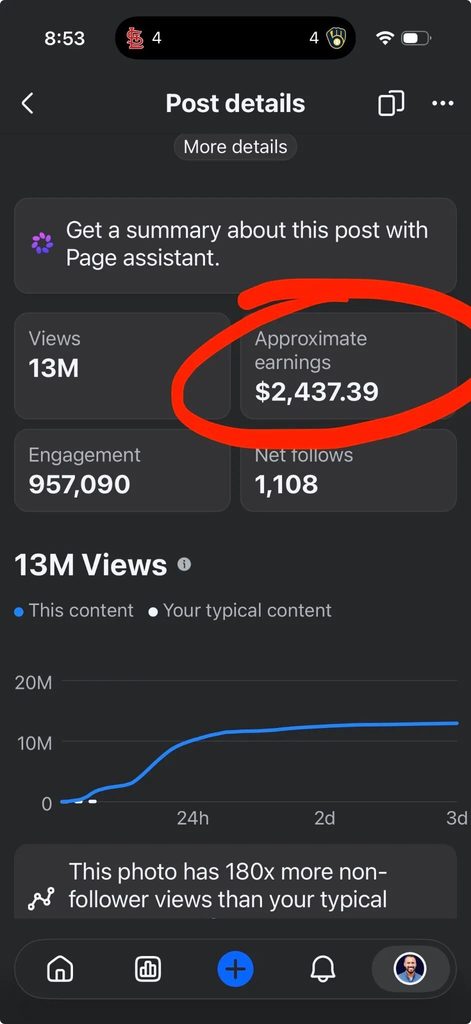
A single image with 13 million views brought in $2,437. A one-sentence plain-text post easily nets $250 to $300. Meanwhile, a Reel with a million views barely makes around $30.
Facebook’s payout algorithm rewards static images and text posts at a vastly higher rate than Reels. This is the exact opposite of YouTube and TikTok—while video is king on those platforms, images and text still reign supreme on Facebook.
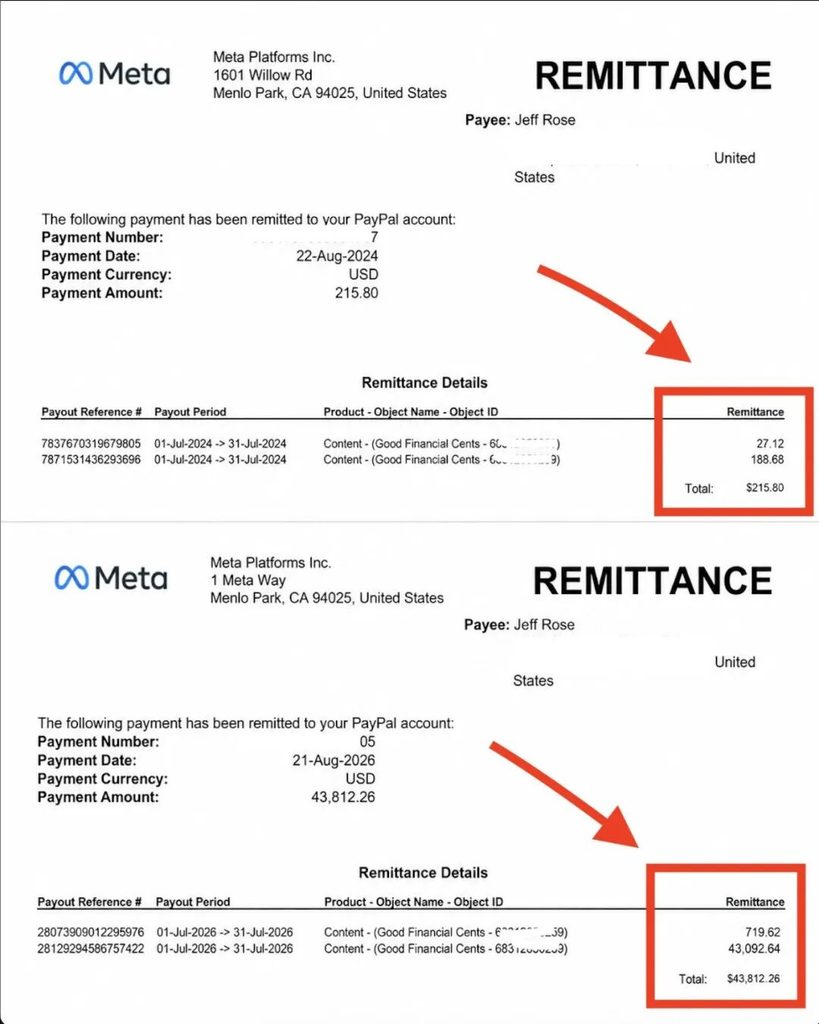
Look at his income trajectory: his very first payout in July 2024 was $215.80. By July 2026, it hit $43,812, and the $53,237 payout that just landed covers his September revenue. In just two years, he scaled from $200 a month to over $50,000 a month.
Facebook’s Monetization Rules
This is an invite-only program. Meta proactively invites eligible creators, though you can also submit an interest form to apply—just keep in mind that an invite isn’t guaranteed.
Earnings are strictly based on “qualified views.” The following do not count: views lasting under 5 seconds, repeat views from the same user, policy-violating posts, copyright-flagged content, and non-public posts. Furthermore, Reels require a minimum of 10 seconds watched, while Stories require at least 5 seconds.
In 2025, Facebook paid out nearly $3 billion to creators. While 60% of that pool went to Reels and 40% went to Stories, images, and text posts, the RPM (payout per 1,000 views) for images and text posts remains substantially higher than that of Reels.
Key factors driving payouts include: longer watch/dwell time (which equals higher earnings), high engagement (which triggers wider algorithmic distribution), North American audiences (which command the highest ad rates), and strong content originality (which boosts recommendation reach).
What This Means for Us
First, Facebook’s barrier to entry is far lower than X’s. X requires 500 paying Premium followers plus 5 million organic impressions—a threshold most creators can’t even touch. Although Facebook is invite-only, as long as you maintain consistent output and steady view counts, Meta will eventually come knocking.
Second, the core of this playbook is high-volume output paired with AI assistance: 24 posts a day, 70% curated viral content, and AI-generated captions. AI handles the heavy lifting and execution; the human simply handles topic curation and final editorial review.
Third, getting into the ecosystem is easier than ever. Meta recently launched Muse, which lets you sign up using an existing Facebook or Instagram account—or simply create a standalone Meta account from scratch. Having Muse gives you a direct entry point into the entire Facebook ecosystem.